In a corner of the printing industry that has long been defined by hardware innovation, a quiet shift is taking place. For years, the spotlight has been fixed on presses, speeds, substrates, and finishing capabilities. But as digital embellishment technology matures, a new truth is emerging. The real differentiator is no longer just what the machines can do. It is what designers choose to do with them.
And increasingly, one name is beginning to surface in that conversation: Emelie Dahlbacka.
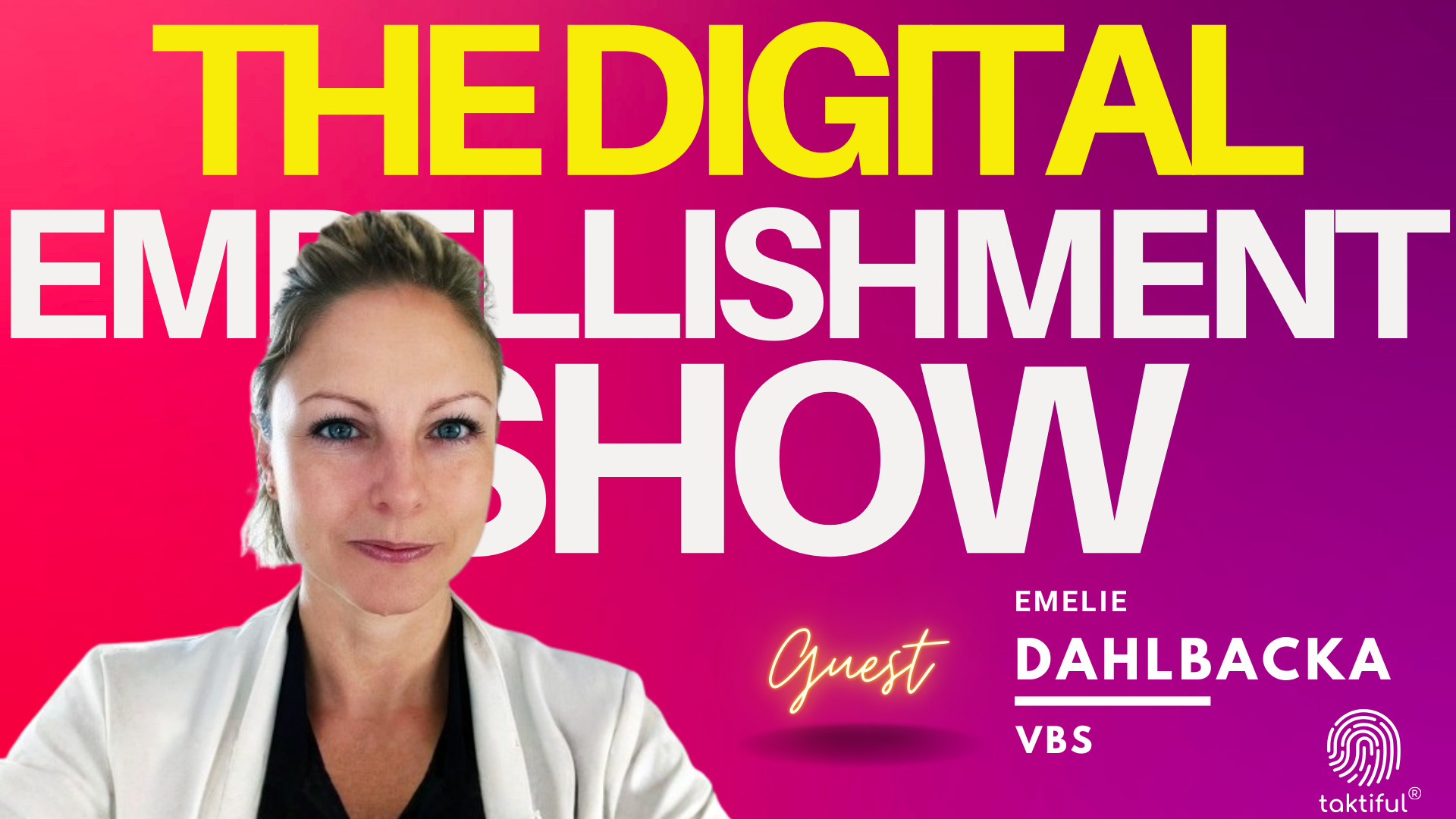
When she appeared on a recent episode of the Digital Embellishment Show, the introduction was casual, almost understated. A creative director based in Sweden. A designer working for an equipment reseller. Someone experimenting with fifth- and sixth-color capabilities. But beneath that modest framing was something far more significant. What emerged over the course of the conversation was the profile of a designer who represents a new generation of thinkers in print. Technically fluent, creatively fearless, and deeply aligned with the capabilities of modern digital presses.
If the embellishment industry has been waiting for its next wave of design leadership, Dahlbacka may very well be at the front of it.
From Equipment to Expression
Dahlbacka’s entry into the world of digital embellishment was not through a traditional design agency or brand studio. Instead, it came from inside the machinery ecosystem itself.
As creative director for a Swedish company that resells print equipment, her role sits at a unique intersection. She is not just designing for aesthetics. She is designing to demonstrate capability. Every sample she produces must do more than look good. It must sell.
This duality has shaped her approach in ways that set her apart from many of her peers.
“So when I design stuff,” she explained, “I always have the machine in mind.”
That mindset may sound simple, but it represents a fundamental shift in how print design is approached. In many traditional workflows, designers create first and production teams adapt later. In Dahlbacka’s world, those two steps are inseparable. The design is informed by the machine from the very beginning.
It is a philosophy that echoes the broader transformation happening across the industry. As presses become more capable, the gap between design and production is narrowing. The designers who thrive will be those who understand both.
Dahlbacka does.
The Fifth-Color Moment
Her introduction to fifth-color printing came in 2021, through a Ricoh press. For many in the industry, the addition of a fifth station, often used for clear, white, or metallic toner, is seen as an incremental upgrade. For Dahlbacka, it was something else entirely.
“It was amazing,” she said. “Man, was it fun.”
That sense of excitement is not trivial. It speaks to the emotional side of innovation, something often overlooked in technical discussions. Fifth color is not just a feature. It is an invitation. An expansion of the designer’s palette beyond CMYK.
And for Dahlbacka, it was the beginning of a deeper exploration.
Her role required her to create print samples that showcased what the machines could do. But instead of treating those samples as technical demonstrations, she approached them as creative opportunities. Each piece became a canvas for experimentation, a way to push the boundaries of what was possible with specialty toners.
It is here that her trajectory begins to diverge from the norm. Many designers encounter new tools and use them conservatively. Dahlbacka leaned in.
Enter the Sixth Color
If fifth-color opened the door, sixth-color blew it wide open.
Her work with Fujifilm’s Revoria press marked a turning point. The addition of pink toner, alongside gold, silver, and clear, introduced a new dimension to digital print. While metallics and coatings had already expanded the tactile and visual possibilities, pink toner brought something different: color expansion.
“I was kind of blown away,” Dahlbacka recalled. “Not only does it enhance regular photos, skin tones and stuff like that, but what colors you can create when you blend it with CMYK…that’s really something.”
This is a critical insight. Much of the industry conversation around specialty colors has focused on effects. Shine, texture, reflectivity. Dahlbacka’s perspective shifts the focus back to color science itself.
Pink toner extends the gamut. It allows for richer reds, more vibrant oranges, and more accurate skin tones. It changes how images are rendered, not just how they are embellished.
For designers who understand this, sixth color is not just an add-on. It is a fundamental expansion of their toolkit.
Designing for Impact
The project that would bring Dahlbacka broader recognition came in the form of an invitation. Not a campaign or a commercial job, but a piece created for her company’s annual open house event, known as Graphic Days.
With the installation of the Revoria press as the centerpiece of that event, the invitation became an opportunity to showcase everything the machine could do.
Dahlbacka embraced the challenge.
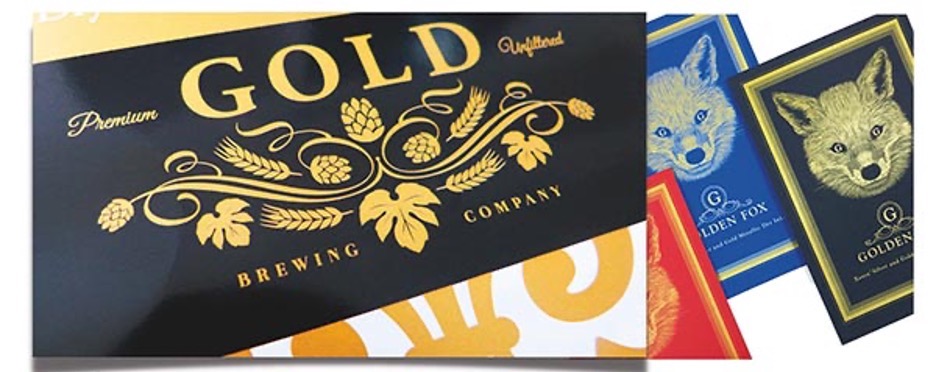
She incorporated multiple specialty toners, layered effects, and color blending techniques into a single piece. The result was not just a demonstration of capability, but a statement about what modern print design could be.
The industry took notice.
Her work earned recognition at the Fujifilm Global Innovation Print Awards, winning in a category focused on the use of specialty toners. For a designer working within a reseller environment, this was no small achievement. It signaled that her work was not just technically proficient, but creatively compelling on a global stage.
More importantly, it validated her approach.
The Industry’s Design Problem
Despite the growing capabilities of digital presses, Dahlbacka is quick to point out that the industry still faces significant challenges, particularly when it comes to design.
“The baseline isn’t hard,” she said, referring to the technical requirements of adding specialty colors to a file. “You don’t have to be a rocket scientist.”
And yet, the gap remains.
Printers struggle to sell embellishments. Sales teams struggle to price them. But perhaps most critically, designers often struggle to design for them.
This is not just a skills gap. It is a systemic issue.
In many design education programs, the focus has shifted heavily toward digital media. Social content, web design, and motion graphics dominate the curriculum. Print production, once a foundational skill, has become secondary.
The result is a generation of designers who are visually talented but technically underprepared for print.
“It’s a common knowledge,” Dahlbacka noted, “that designers nowadays really don’t understand how to create good print production files.”
This disconnect has real consequences. When designers do not understand the capabilities of embellishment technology, they cannot design to leverage it. And when they do not design for it, printers cannot sell it.
It is a cycle that limits adoption.
Bridging the Gap
Recognizing this challenge, Dahlbacka has begun to position herself not just as a designer, but as an educator.
Her collaboration on a forthcoming certification and design course focused on fifth- and sixth-color printing represents a significant step in that direction. The course, which will be hosted on the Taktisphere platform, aims to provide designers with the knowledge and tools they need to effectively work with specialty toners.
It is a timely initiative.
As the industry continues to invest in advanced presses, the need for education is becoming increasingly urgent. Technology alone is not enough. Adoption depends on understanding.
Dahlbacka’s approach to teaching reflects her own experience. Practical, accessible, and rooted in real-world application. She emphasizes that the fundamentals are not overly complex, but that there are techniques and nuances that can elevate a design from good to exceptional.
“I will give you all my tips and tricks,” she said with a smile.
For an industry hungry for guidance, that promise carries weight.
The Power of Community
Another factor in Dahlbacka’s rise is her engagement with the broader embellishment community.
Platforms like Taktisphere have created spaces where designers, printers, and technologists can share ideas, showcase work, and learn from one another. For Dahlbacka, this has been transformative.
“That’s the first place I’ve found that I can totally nerd out about print embellishments,” she admitted.
It is a revealing statement. Innovation often thrives in environments where curiosity is encouraged and expertise is shared. In many traditional workplaces, opportunities for that kind of exchange are limited. Community platforms fill that gap.
Dahlbacka’s active participation, posting work, sharing insights, and engaging in discussions, has helped amplify her voice. It has also positioned her as a connector, someone who not only creates, but contributes.
In an industry that has historically been fragmented, this kind of engagement is increasingly valuable.
A New Kind of Designer
What makes Dahlbacka particularly compelling is not just her technical skill or creative output, but the combination of the two.
She represents a new kind of designer. One who is equally comfortable discussing color gamuts and creative concepts. One who understands the mechanics of a press as well as the psychology of visual impact.
This hybrid skill set is becoming essential.
As digital embellishment continues to evolve, the lines between design, production, and sales are blurring. Designers are expected to understand business objectives. Printers are expected to think creatively. Sales teams are expected to communicate technical value.
In this environment, individuals who can bridge disciplines will have a distinct advantage.
Dahlbacka already does.
The Road Ahead
It is still early in her career, but the trajectory is clear.
Her work has already earned industry recognition. Her perspective aligns with the future direction of print. And her willingness to share knowledge positions her as a leader, not just a participant.
Perhaps most importantly, she brings a sense of enthusiasm that is contagious.
In an industry that can sometimes feel weighed down by legacy processes and incremental change, that energy matters. It signals possibility. It invites others to explore.
As Kevin Abergel noted during the interview, “Her star is definitely rising.”
That statement may prove to be an understatement.
Why It Matters
The emergence of designers like Dahlbacka is not just a personal success story. It is a sign of where the industry is heading.
Digital embellishment is no longer a niche capability. It is becoming a core part of how print differentiates itself in a crowded media landscape. As brands look for ways to create more engaging, tactile experiences, the demand for embellished print will continue to grow.
But technology alone will not drive that growth.
Design will.
The ability to translate technical capabilities into compelling visual experiences is what ultimately creates value. It is what captures attention, communicates brand identity, and justifies premium pricing.
In that context, the role of the designer becomes central.
And the need for designers who understand embellishment becomes critical.
A Star in the Making
There is a moment in every industry when a new generation begins to take shape. It does not happen all at once. It starts with individuals. People who approach familiar tools in new ways. Who challenge assumptions. Who push boundaries.
Emelie Dahlbacka is one of those individuals.
Her journey from creating print samples for a reseller to winning international awards and developing educational programs reflects a broader shift in the industry. It is a shift toward integration. Toward collaboration. Toward a deeper understanding of what print can be.
If the past decade was defined by technological advancement, the next may well be defined by creative application.
And if that is the case, Dahlbacka is arriving at exactly the right time.
The machines are ready.
Now, the designers are catching up.
And in that space, between capability and creativity, a new generation of leaders is emerging.
Emelie Dahlbacka is one to watch.